
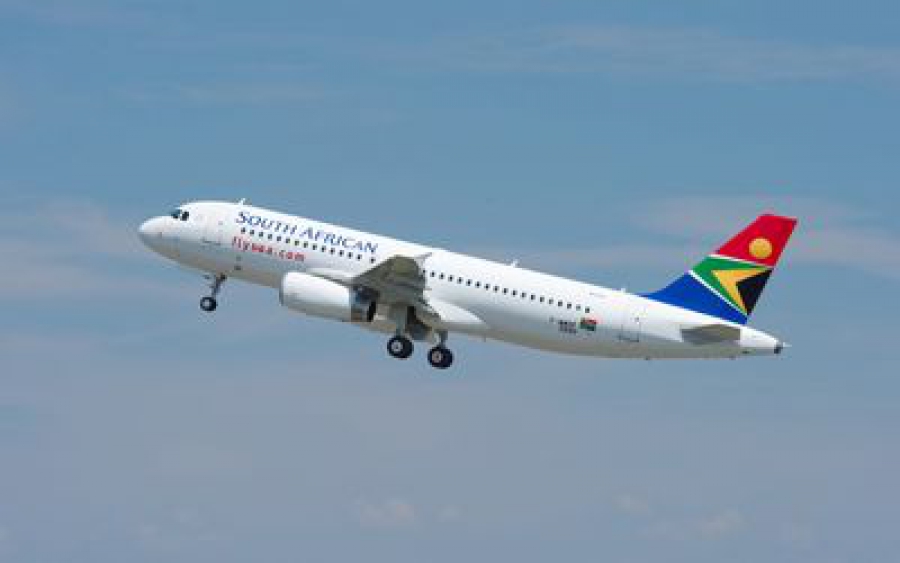
ANY move to improve air connections in Africa is to be welcomed. But it might be wise for South African Airways (SAA) to revisit the history books before it makes a decision about a proposed West African hub and engagement with the Nigerian government to build capacity for a yet-to-be-launched national carrier.
In the case of Nigeria, our national carrier has entered into one joint venture, which ended badly, and nearly entered a second partnership that was scuppered at the last minute.
In 2001, a one-year code-share arrangement was concluded between SAA and Nigeria Airways to operate the ailing Nigerian flag carrier’s routes from Lagos to New York, which it no longer had the capacity to service. Nigeria Airways received a block of seats on each flight, with SAA providing the aircraft and sharing passenger loads and marketing.
But just a few months into the deal, SAA pulled out, saying the arrangement was not working.
This not only meant the collapse of flights between Nigeria and the US, but one less flight between Lagos and Johannesburg. This reduced SAA’s weekly flights between Johannesburg and Lagos from three to two (the Nigerian carrier was unable to operate its South African slots but would not let SAA use them).
At the time of the New York deal, SAA, then headed by Coleman Andrews, an American, had an eye on a stake in Nigeria Airways. The Nigerian carrier was in intensive care with just two functional aircraft. But he believed SAA could capitalise on Nigeria’s lucrative — and mostly dormant — international routes.
However, just two years later, Nigeria Airways was liquidated.
Despite the acrimony around its premature withdrawal from the New York deal, in 2004, SAA was named the only bidder to become the technical partner for and 30% stakeholder in a new Nigerian national airline, Nigeria Eagle.
Nigerians strongly objected to the proposal, citing SAA’s inability to manage its own operation profitably and the fact it was government-owned.
They said it was tantamount to Nigeria ceding its aviation sovereignty to another nation — with particular unease about the fact that the other government involved was South Africa’s, given the perception that South African companies were trying to colonise the Nigerian economy.
The negotiations deadlocked over SAA’s refusal to guarantee Nigeria an option to buy a 10% stake in SAA if it was privatised. SAA was accused of being arrogant and exploitative.
The issue was divisive in an already difficult relationship.
At the 11th hour, Virgin Atlantic stepped in and won the bid to become a 49% partner in the new airline, renamed Virgin Nigeria.
Virgin exited the deal a few years later, accusing the Nigerian government of violating its contract.
Until a few months ago, there was no more talk of another Nigerian national airline. Arik Air, a privately owned Nigerian airline that bought Nigeria Airways’s assets for a song, took up the bilateral slots on the Johannesburg route, which it flies to this day.
Now, Nigeria’s aviation minister is said to be considering floating another national carrier — Nigeria One. The government has a dismal record, not just of running airlines but of even regulating the country’s private airlines. SAA’s involvement in a new state-run venture in the West African country may be a big success — but given the history, it would be wise to be cautious.
SAA has also had difficulties in other African initiatives. In 1995, it became the majority stakeholder in a new regional airline, Alliance Air, with the governments of Uganda and Tanzania. The two East African countries cited multiple disagreements with SAA and pulled out. By 2000, the airline no longer existed.
In the same year, SAA failed in its bid for a 49% stake in Uganda Airlines but was successful in its later bid for a similar stake in Air Tanzania, in 2002. The South Africans hoped to position Dar es Salaam as a regional hub. But the privatised airline lost money and there were disagreements about strategy. In 2006, Tanzania bought back SAA’s stake.
SAA needs to think carefully about its African strategy.
West Africa, in particular, is a tough operating environment. It is littered with failed airlines, most of them state-owned. Naivety in this regard could be costly for an airline with a lot to lose.
• Games is CEO of Africa @ Work, an advisory and consulting company.